



Cart
Your shopping cart is empty!
It's never too late to make things right :)
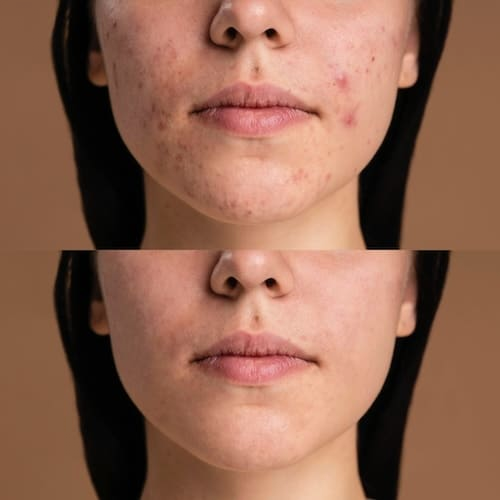


Copied
Cleansing is a fundamental step in skincare, essential for all skin types. In your daily skincare routine, you use makeup removers and facial cleansers: micellar water, foams, gels, hydrophilic oils, and balms.
These products effectively remove surface impurities, but they do not cleanse the pores or help exfoliate dead skin cells. For this purpose, a special cosmetic procedure is performed—professional facial cleansing. Why is it necessary, how often is it performed, what cleansing methods exist, and who are they suitable for—you’ll find answers to all these questions in this article.
The skin is the body’s largest organ, where various biochemical processes and cell renewal occur constantly. The facial skin has a large number of sebaceous and sweat glands and is exposed to atmospheric pollutants, ultraviolet radiation, and other adverse environmental factors. As a result, pores become clogged and develop into open (blackheads) or closed comedones (whiteheads). Without proper cleansing, the skin becomes dull, takes on a grayish tint, has an oily sheen, and looks neglected.
To remove impurities, cosmetologists use several methods:
Each of these methods effectively achieves high-quality skin cleansing. To increase the effectiveness of the treatment, a cosmetologist may combine several methods and perform a combined facial cleansing. In practice, the use of a device is often combined with mechanical, manual removal of individual, larger impurities.
During the treatment, dead skin cells, excess sebum, dust, and other impurities are removed. Cleansing involves deeply cleansing the pores of sebum blockages and the bacteria accumulated within them. After a visit to the cosmetologist, the skin becomes:
Although facial cleansing is one of the safest procedures in cosmetology, it is not suitable for everyone. Contraindications depend on the cleansing method. Non-invasive methods have a minimal list of restrictions, while deep mechanical and laser treatments are performed only in strictly defined cases and are not recommended for sensitive skin.
The procedure is not performed in the presence of the following diseases and conditions:
Facial cleansing is not recommended during the recovery period following plastic surgery, injectable cosmetic procedures, and invasive procedures using devices. After such procedures, you should wait at least 4 weeks to allow the skin time to heal and regenerate.
Cleansing is basic skincare, not a treatment for acne. Regular visits to a cosmetologist help prevent breakouts and manage acne, but in the case of existing pimples and inflammation, such treatments can worsen the condition. The same applies to blackheads: cleansing removes them only temporarily, so if we neglect our at-home skincare routine, impurities will start to build up in the pores again.
Mechanical pore cleansing should be performed by a professional cosmetologist. Inexpert DIY procedures carry the risk of infection and the development of a rash. Careless squeezing of blackheads and closed comedones is often associated with excessive skin damage, scarring, or hyperpigmentation.
At home, you can perform vacuum or ultrasonic cleansing. For this purpose, use certified devices and be sure to consult a cosmetologist before use.
After the active cleansing phase, the cosmetologist applies masks that tighten pores and regenerate the epidermis. If the procedure was performed correctly and the patient follows the post-treatment care recommendations, there will be no problems.
If persistent redness remains after cleansing or new pimples appear, this is a sign that the procedure was performed incorrectly. Most often, this problem affects people who buy manual cosmetic tools and try to squeeze blackheads at home. In the hands of an experienced cosmetologist, all methods will be safe and minimally invasive.
The non-invasive method is one of the most popular cleansing techniques and is suitable for most cosmetologist patients.
The procedure is recommended for:
Mechanical cleansing is recommended for people with dense, oily skin, with a large number of blackheads and closed comedones. Such elements cannot be removed using machine-based or atraumatic methods, so careful manual extraction is the only way to get rid of them.
Modern machine-based methods provide good results and do not cause as much skin trauma as mechanical blackhead removal. Each option has its own characteristics:
Recovery after the procedure lasts from 1 day in the case of ultrasound or atraumatic methods to 5–7 days in the case of mechanical cleansing. During this period, the following recommendations should be followed:
Skin care between cleansing treatments is aimed at maintaining and consolidating the achieved results. To slow down pore clogging and support the exfoliation of dead skin cells, a cosmetologist will recommend products with low acid concentrations, enzymatic powders, toners, and serums containing niacinamide. It is also essential to perform high-quality cleansing: washing your face in the morning and a two-step routine in the evening if makeup and/or SPF creams were applied to the skin during the day.
The frequency of treatments is determined individually, taking skin type into account.
People with overactive sebaceous glands and pores that become clogged quickly are advised to visit a cosmetologist every 1–2 months.
For normal and dry-prone skin, cleansing should be performed no more than once every 3 months. The frequency of treatments depends on your at-home skincare routine and the presence of internal factors contributing to skin deterioration.
For detailed information, consult your cosmetologist.
Professional cosmetologists recommend performing at-home ultrasonic cleansing as follows.
When performing the procedure, strictly follow the sequence of steps to avoid damaging the skin. First, wash your hands thoroughly to prevent transferring bacteria to your face. Then, remove your makeup and use a regular facial cleanser.
The online store for medical equipment offers not only vacuum devices for facial cleansing, but also other skin care devices.
Японские технологии,
которые превышают ожидания
На первую покупку


