



Cart
Your shopping cart is empty!
It's never too late to make things right :)
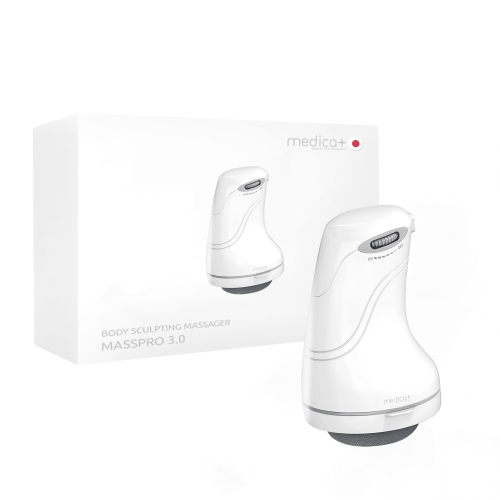
Anti-cellulite massagers are designed to stimulate the skin and subcutaneous tissue in order to reduce the appearance of cellulite and improve blood circulation. Such devices work using vibration, rollers, or vacuum. The online medical equipment store Medica+ offers high-quality products that effectively smooth the skin and accelerate metabolic processes in problem areas.
It is a device that massages the skin and effectively fights subcutaneous fat, thereby reducing the “orange peel” effect. An anti-cellulite massager for legs improves epidermal elasticity and restores its tone.
Devices work through mechanical impact on the skin and subcutaneous tissue. Professional anti-cellulite massagers stimulate blood circulation and activate lymphatic drainage. This helps remove excess fluid and toxins. A high-quality anti-cellulite leg massager breaks down fat deposits, and the skin becomes firmer and smoother after use.
Professional anti-cellulite massagers stimulate the body’s natural processes and support tissue regeneration. After use, problem areas become less noticeable even without intense physical activity.
The main selection criteria include:
Models for home use are lightweight (200–800 g) and feature an ergonomic design. Professional devices are more powerful and equipped with additional functions such as vibration, ultrasound, timer, and cupping effect.
Use the device regularly, 3–5 times per week, following the recommended movement technique described in the manufacturer’s instructions. To improve glide and enhance skincare results, combine procedures with anti-cellulite creams or oils.
The devices are suitable for people who are actively losing weight, as they help quickly tighten the skin. They are also considered an effective preventive solution against cellulite.
Even the best anti-cellulite massager is not suitable for everyone. It should not be used on irritated, damaged, or very sensitive skin, as well as in the presence of open wounds or inflammation. Contraindications also include vascular atherosclerosis, thrombophlebitis, severe hypertension, heart failure, oncology, and pregnancy.
In our online store, you will find certified massage equipment with a warranty of up to 36 months. We offer fast delivery and service support for purchased devices.
The device helps reduce the appearance of cellulite and improves skin tone. However, the best results are achieved when combined with a healthy lifestyle and balanced diet.
Move from bottom to top across problem areas. One session usually lasts 10–20 minutes.
Procedures should be performed 3–5 times per week, taking into account the intensity of impact and skin sensitivity.
Choose a model with a suitable type of action and adjustable intensity, adapted for different body areas.
Yes, but you should follow the recommended intensity to avoid damaging the skin.
Usually after 3–4 weeks of regular use.
It should not be used on irritated, damaged, or very sensitive skin, as well as in the presence of open wounds, inflammation, or serious skin conditions. Contraindications also include atherosclerosis, thrombophlebitis, heart failure, oncological diseases, and pregnancy.




Японские технологии,
которые превышают ожидания
На первую покупку


