

Cart
Your shopping cart is empty!
It's never too late to make things right :)


Copied
As people age, most experience thinning hair and hair loss, but it is not uncommon for this problem to appear at a young age. Over 50% of all cases of hair loss are due to androgenetic alopecia. It is more common in men, but women are also susceptible to this condition, although in women it may manifest with atypical symptoms.
Androgenetic alopecia is a serious problem that can and should be treated to restore healthy, thick hair.
Androgenetic alopecia is hair loss caused by male hormones in genetically predisposed individuals. It occurs in men of all ages, and in women it develops mainly during the postmenopausal period. Hair loss affects the forehead and the crown of the head.
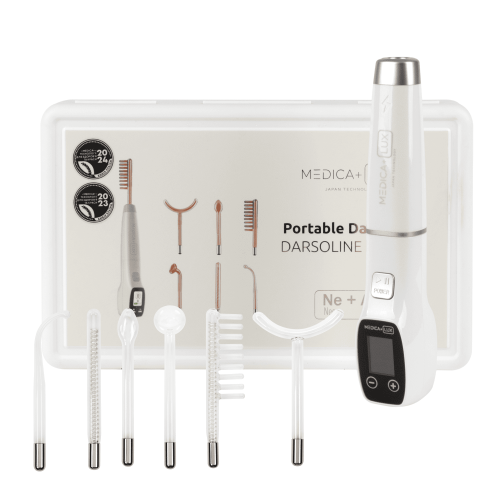
Hair on the back of the head usually remains thick even as the condition progresses. In women, diffuse androgenetic alopecia is often observed, which is particularly noticeable with a straight part or when attempting to tie the hair into a bun. In this case, proper hair care plays an important role, and the appropriate in our catalog of medical equipment Medica+.
In addition to hair loss, androgenetic alopecia causes changes in the structure of the hair shaft. The hair becomes thinner, loses its natural color, and becomes short and barely visible.
In cases of progressive hair loss, the scalp appears perfectly smooth and shiny, with no visible hair follicle openings. Many patients suffer from dandruff (seborrheic dermatitis), which is caused by sex hormones.
The condition is multifactorial—hereditary, hormonal, and external factors contribute to its development. Alopecia develops through the same mechanism in both sexes, as androgens are also present in women’s blood.
Excessive influence of male hormones (androgens) on hair follicles—a key factor in the development of hair loss. Androgens disrupt the hair growth cycle: they shorten the growth phase (anagen) and promote the transition to the resting phase (telogen). Hormones disrupt the nutrition and blood supply to hair follicles, causing them to gradually die off and be replaced by connective tissue.
There are three main causes of the negative impact of androgens on the scalp:
Several genes are involved in the development of hair loss; these genes determine the number of androgen receptors and the activity of 5-alpha-reductase. They determine the sensitivity of hair follicles to male hormones. These genes can be inherited from the mother and father or from both parents simultaneously. The genetic factor is more pronounced in men—in 80% of patients, the parents also suffer from hair loss.
Changes in the structure of hair follicles occur under the influence of hormones, not genetic predisposition, which is why external factors play a minor role. However, they can increase the risk of hair loss and accelerate its progression.
The most common factors:
In men, diagnosis is usually straightforward. A receding hairline on the forehead combined with baldness on the crown of the head are characteristic symptoms that can be identified during a physical examination. Examining women may be more difficult, as male-pattern baldness is less common in them. To make an accurate diagnosis, a detailed medical history will need to be taken and hormonal tests performed.
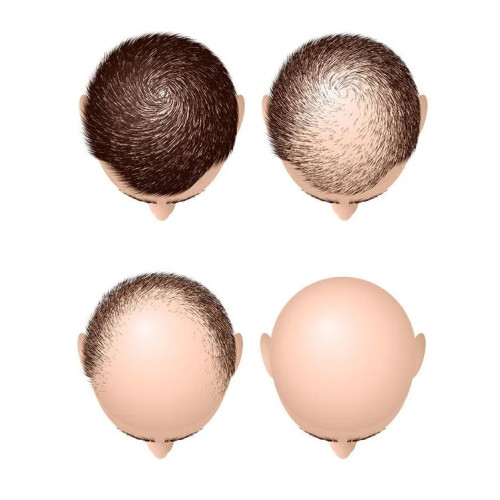
To reliably determine the presence of the condition and its stage of progression, doctors use the special Hamilton-Norwood scale. According to this scale, there are seven stages of the condition:
A trichogram is an examination of hair density and quality using a special device with high magnification. In cases of androgenetic alopecia, it is used to assess the ratio of hair follicles in the growth phase to those in the resting phase.
Normally, this ratio is 9:1. In cases of hormone-related hair loss, the number of hairs in the resting phase (telogen) increases significantly.
None of the existing methods can eliminate genetic predispositions or increased sensitivity to androgens. However, this is no reason to despair. Comprehensive therapy under the supervision of a trichologist aims to slow hair loss, strengthen hair follicles, and increase hair density. A combination of medications, laser therapy, microcurrents, and injections yields good results.
The main drug approved by the FDA for androgenetic alopecia in men and women is minoxidil. Originally, this drug was developed to treat hypertension, but its additional trichological effects were later noted. The drug improves blood supply and nourishment to the hair follicles, stimulates new hair growth, and reduces hair loss. It is used in topical preparations applied to the scalp and in the form of subcutaneous injections.
Minoxidil is effective when used in the early stages of androgenetic alopecia. The maximum effect is observed within the first 2–3 years of use. The drug is not a hormonal preparation, so it only combats the symptoms of hair loss and does not address its causes.
For androgenetic alopecia in men, finasteride—an inhibitor of the 5-alpha-reductase enzyme—can be used. It reduces the amount of active forms of testosterone, limiting the negative impact of androgens on hair follicles. Thanks to these effects, the drug slows the rate of hair loss, helping to maintain hair density for a long time.
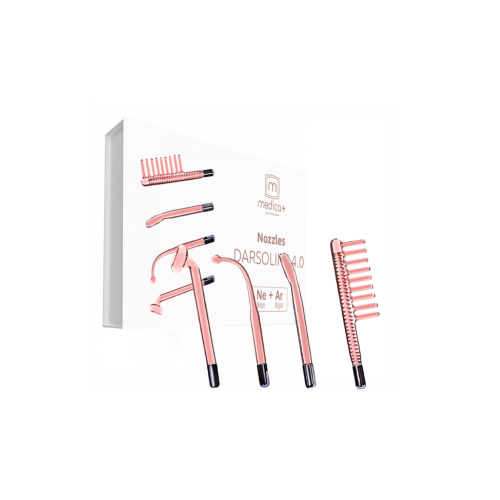
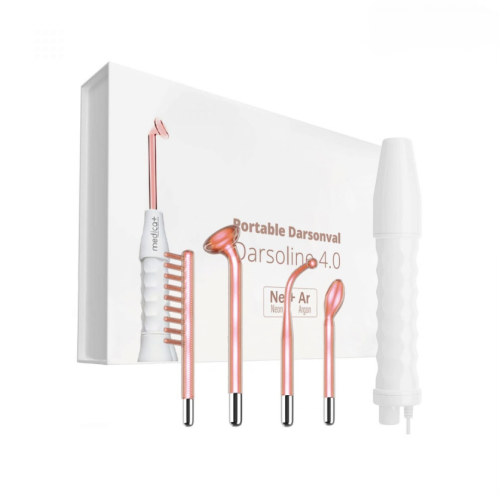
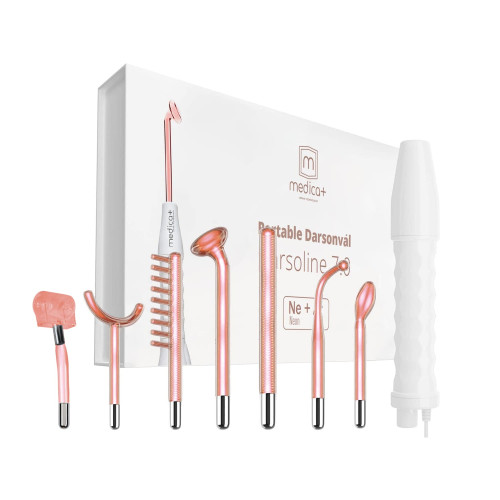
In addition to medications, cosmetic and physical therapy methods are actively used for androgenetic alopecia. The most effective methods include:
If androgenetic alopecia has reached a severe stage, medications and physiotherapeutic methods will not produce the desired effect. In such a situation, a hair transplant using the patient’s own hair may be helpful. This is a surgical procedure during which hair follicles from the androgen-resistant occipital region are transferred to the forehead and crown of the head. The hair follicles gradually take root and give rise to new, healthy hair. This method increases hair density and helps conceal areas of baldness.
To reduce the risk of hair loss, follow standard recommendations:
If close relatives have hair loss issues, you should pay special attention to your health. At the first signs of hair loss and deterioration in the condition of your hair, it is recommended to consult a trichologist for testing and to begin personalized treatment.
Японские технологии,
которые превышают ожидания
На первую покупку